

Why Am I Not Losing Weight Even With Exercise
I spent years trapped in this exact cycle. I assumed hard workouts guaranteed a lean physique. I was wrong. The human body operates on strict biological rules. Exercise represents just one small piece of the total puzzle.
Many people think their metabolism is broken. Sometimes a medical issue plays a role. Most of the time the math just does not add up.
You are not losing weight because exercise alone fails to create a sustained caloric deficit. People overestimate calories burned during workouts and eat more food to compensate. Muscle repair also causes temporary water retention which hides fat loss on the scale.
The Science Behind Calorie Deficits
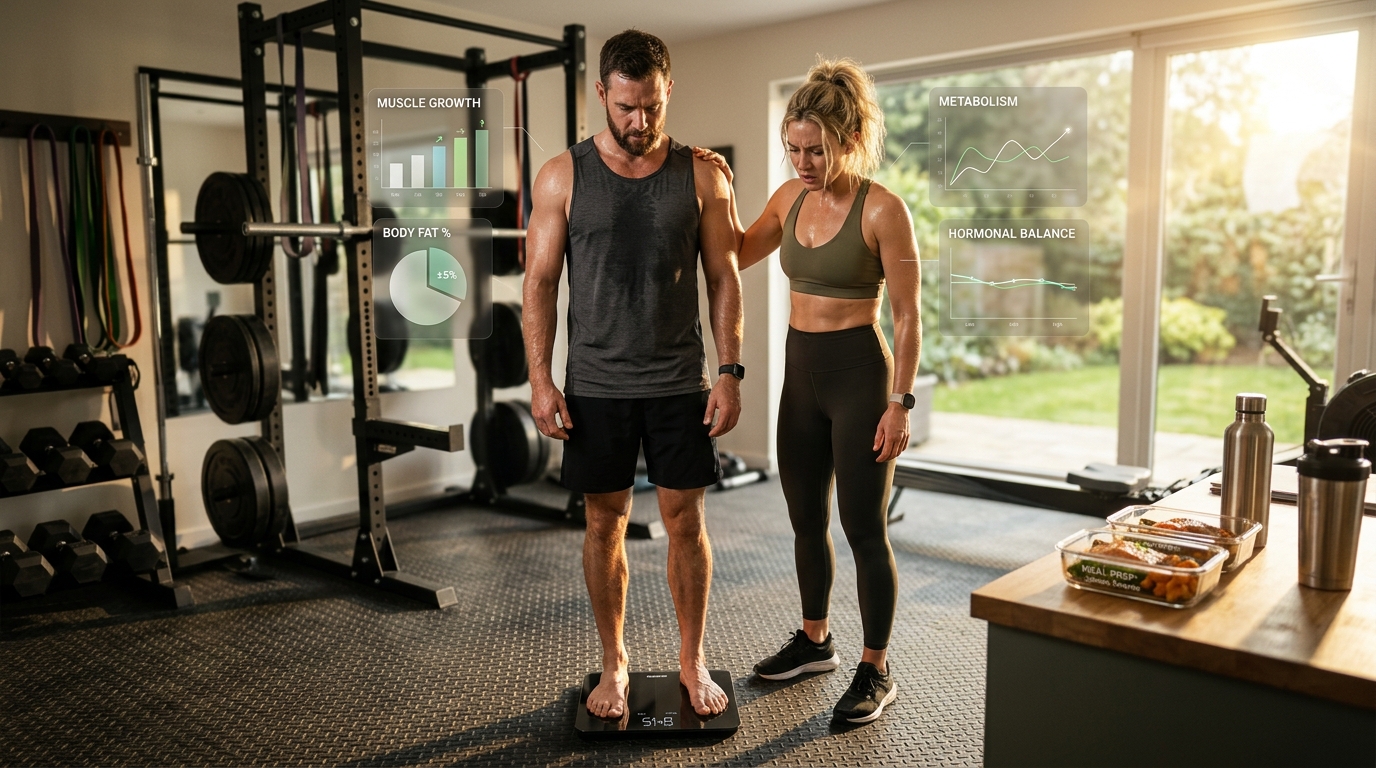
Weight loss demands a caloric deficit. You must consume fewer calories than your body uses. Your Total Daily Energy Expenditure dictates this process. This energy expenditure consists of four main pillars.
-
Basal Metabolic Rate (BMR): The energy your body needs to stay alive.
-
Thermic Effect of Food: The energy required to digest meals.
-
Exercise Activity: The calories you burn in the gym.
-
Non-Exercise Activity Thermogenesis (NEAT): The calories you burn walking typing or doing chores.
Exercise makes up a tiny fraction of your total daily burn. You might burn 300 calories during an intense spin class. You can eat 300 calories in two minutes with a handful of almonds. You cannot out-train a high-calorie diet.
Also Read: Do I Need Protein Shakes To Build Muscle Naturally 2026
Hidden Dietary Compensation
Working out makes you hungry. Your brain senses an energy drop. It sends signals to replenish those stores. You finish a tough workout and feel accomplished. You grab a protein shake. You add a scoop of peanut butter. You pour in some honey. That post-workout snack contains 600 calories.
This is dietary compensation. You eat more food because you feel you earned a reward. These extra calories erase the deficit you created in the gym. Without tracking your food you operate blind. You exist in a caloric surplus.
Use a digital food scale. Measure your cooking oils. Check the labels on your sauces. Hidden liquid calories sabotage the most intense training routines.

Water Retention and Muscle Soreness
You start a new weightlifting program. Your muscles ache for days. This pain is Delayed Onset Muscle Soreness.
Lifting weights creates micro-tears in your muscle tissue. Your body rushes to repair this damage. The repair process requires inflammation. Inflammation brings excess fluid to the muscles. This excess fluid shows up as weight on the scale. You find yourself exercising but scale goes up.
Your body stores carbohydrates in your muscles as glycogen stores. Every gram of stored glycogen holds onto three grams of water. You eat a big plate of pasta before your workout. Your body stores that energy. The water comes with it.
You look fatter after starting the gym because your muscles swell with water and glycogen. This is water retention. It masks true fat loss.
Body Recomposition versus Weight Loss
Beginners experience a unique phase. Fitness coaches call these newbie gains. You build muscle mass and lose adipose tissue at the same time. Lifting weights causes muscle hypertrophy. Your muscles grow larger and denser. Muscle takes up less space than fat.
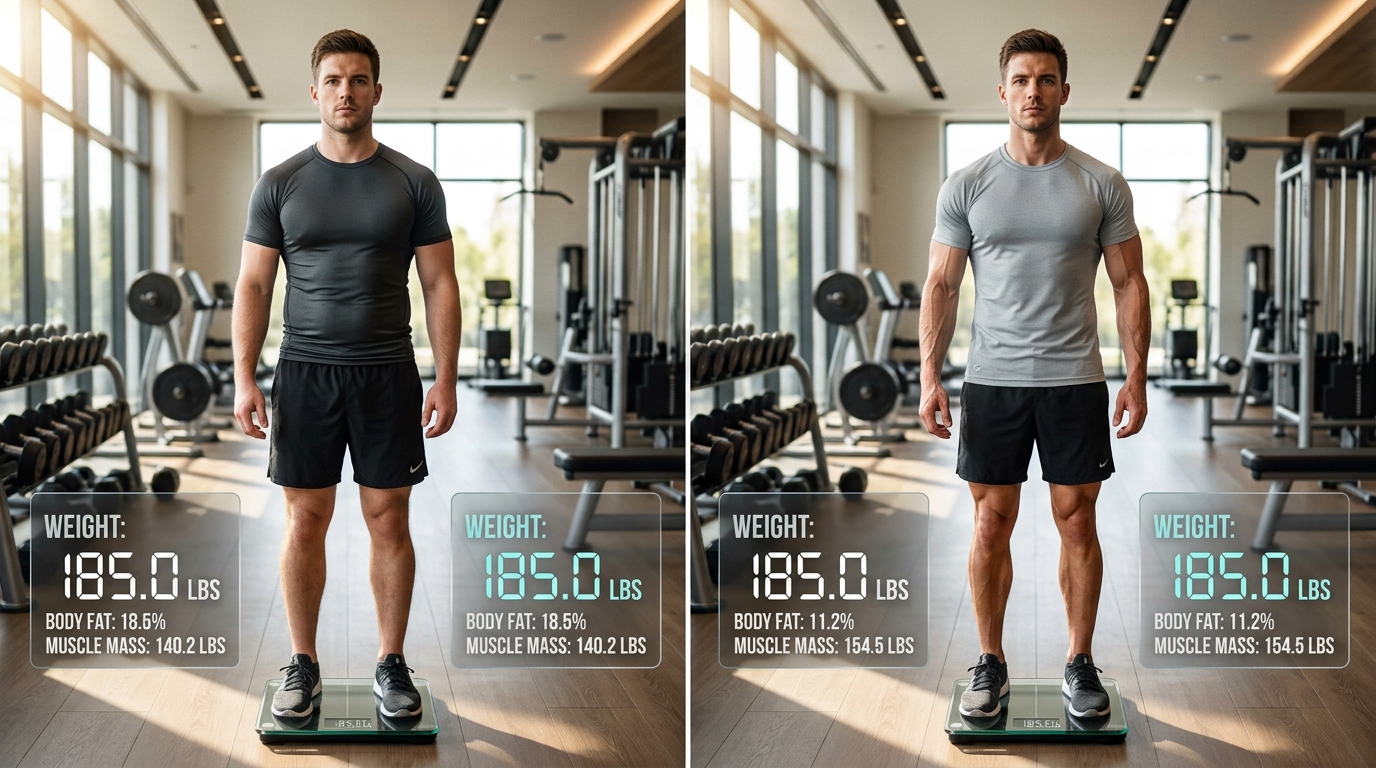
You might weigh 180 pounds in January. You lift weights for three months. You step on the scale in April. You still weigh 180 pounds. You feel defeated.
But your pants fit looser. Your waist looks smaller. You changed your body composition. You gained three pounds of muscle and lost three pounds of fat. The scale measures gravity. It does not measure health.
Scale Weight vs Body Composition
| Metric | Scale Weight | Body Composition |
| What It Measures | Total mass of everything | Ratio of fat to muscle |
| Accuracy | Low | High |
| Best Tool | Bathroom scale | DEXA scan or tape measure |
The NEAT Drop
Non-Exercise Activity Thermogenesis plays a massive role in fat loss. This covers all your casual movements. Pacing the room counts. Tapping your foot counts. Carrying groceries counts.
You perform a brutal leg workout on Tuesday morning. You feel exhausted by noon. You sit on the couch for the rest of the day. You take the elevator instead of the stairs. You ask your partner to grab the remote control.
Your subconscious brain forces you to move less to conserve energy. Your daily calorie burn plummets. You burned 400 calories in the gym but lost 500 calories of non-exercise movement. You end the day in a caloric surplus.
Metabolic Adaptation
The human body learns and adapts. You start running three miles a day. At first the run feels brutal. You burn a lot of calories because your heart and lungs work hard.
Two months pass. The three-mile run feels effortless. Your stride improves. Your heart pumps blood with less effort. Your body becomes an efficient machine.
Efficient machines burn less fuel. You burn fewer calories doing the exact same run. You hit a weight loss plateau. To keep losing weight you must change the stimulus. You must run faster lift heavier or change the routine.
High Cortisol and Poor Sleep
Sleep deprivation destroys fat loss. A lack of sleep spikes ghrelin. Ghrelin is the hormone that makes you hungry. Poor sleep also lowers leptin. Leptin is the hormone that tells your brain you are full.
Chronic stress spikes cortisol. Cortisol and weight gain go hand in hand. Cortisol signals your body to store fat around your midsection.
You drink three cups of coffee. You sleep five hours a night. You train intense cardio every single day. Your body exists in a state of panic. It holds onto every ounce of fat for survival. You must prioritize sleep to see results.
How to Break a Weight Loss Plateau
You need a solid plan. Stop guessing. Use this framework to troubleshoot your routine.
-
Track your calories with a food scale for one week.
-
Sleep eight hours a night to regulate insulin and cortisol.
-
Measure your waist and hips with a tape measure.
-
Take a rest day to reduce muscle inflammation.
-
Book a medical test if you suspect hormone issues.
Decision Framework Table
| Your Symptoms | Probable Cause | Action to Take |
| Clothes fit looser but scale stuck | Muscle hypertrophy | Ignore the scale |
| Muscles ache and feel swollen | Water retention | Rest and drink water |
| Craving sweets and tired all day | Sleep deprivation | Sleep eight hours |
| Working out but getting softer | Caloric surplus | Track food with a scale |
When to Seek Medical Testing
Sometimes diet and exercise fail. You track your calories. You sleep eight hours. You lift weights. The scale refuses to move for eight weeks. You need outside help.
Medical conditions prevent weight loss. Hypothyroidism slows your Basal Metabolic Rate. Polycystic Ovary Syndrome creates insulin resistance. Your body produces too much insulin and stores excess sugar as fat.
You need clear data. Online calculators use generic formulas. They guess your metabolism. You find precise answers by booking a professional test.
Search for a DEXA scan near me. These machines scan your bone density and exact body fat percentage. A DEXA scan costs between $50 and $150 depending on your region. Some gyms offer bioelectrical impedance scales. These send a small current through your body to measure fat. They lack the precision of a DEXA scan.
Look for metabolic testing clinics in your city. They measure your breath to find your exact resting calorie burn.
Find a sports nutritionist near you. A registered dietitian helps you build a meal plan based on your bloodwork.
Frequently Asked Questions
What is a caloric deficit?
A caloric deficit happens when you eat fewer calories than your body burns in a day. Your body needs energy to function. It takes this missing energy from your stored body fat. This causes fat loss.
Can you out-train a bad diet?
No. You can eat a 1000-calorie burger in ten minutes. You need two hours of intense sprinting to burn off 1000 calories. Diet controls weight loss. Exercise controls fitness.
Why do I look fatter after starting the gym?
Your muscles suffer micro-tears during workouts. Your body heals these tears using water and inflammation. Your muscles swell. This swelling makes your clothes feel tight. The swelling fades after a few days of rest.
Am I gaining muscle or just not losing fat?
Measure your waist. Wrap a tape measure around your stomach every week. The scale stays the same but your waist gets smaller. This means you gained muscle and lost fat. If your waist stays the same you eat too much.
How long does water weight last after starting to workout?
Initial water weight from a new routine lasts between three and six weeks. Your muscles adapt to the new stress. The severe inflammation stops. The excess water flushes out of your system.
Does cardio or weightlifting burn more fat?
Cardio burns more calories per minute during the workout. Weightlifting builds muscle mass. Muscle mass increases your daily resting metabolism. You need both for long-term body composition changes.
Why is my weight staying the same on a calorie deficit but not losing weight?
You miscalculate your calories. People forget to count cooking oils and drinks. You also experience severe water retention from stress or menstrual cycles. Track every single bite for one week to find the hidden calories.
Conclusion
Fitness journeys test your patience. You put in the work and expect clear rewards. The mirror refuses to show progress. The scale mocks your effort.
Take a step back. Analyze your routine. Count the liquid calories. Put down the heavy weights for a day and sleep for nine hours. Stop trusting the bathroom scale as the ultimate judge of your health. Focus on how your clothes fit. Focus on your energy levels. Find local experts when you hit a wall. Make small changes and the results follow.



Leave a Reply